
The History of Whistler Creekside
The Original Whistler Mountain Resort
WHISTLER CREEKSIDE
Where It All Began
Long before the gondolas, the Olympic torch, and the first skiers carving their way down the mountain, Whistler Creekside was already alive with story. It is the original heartbeat of the valley — a place shaped by wilderness pioneers, visionary dreamers, and a community that chose roots over rush.
Today, Creekside is where Lodging Ovations calls home. And knowing how this place came to be makes every visit feel a little more meaningful.
The Valley Before the Lifts
The Land of the Skwxwu7mesh and Lil'wat People
Long before settlers arrived, the land now known as Whistler was home to the Skwxwu7mesh (Squamish) Nation and the Lil’wat7ul Nation. These communities travelled, fished, hunted, and gathered across the Sea-to-Sky corridor for thousands of years. Their deep relationship with this landscape — the lakes, forests, rivers, and mountain passes — is woven into the very character of the valley. Creekside today operates on this shared, unceded territory, and that history deserves to be honoured at the beginning of any story about this place.
Trappers, Prospectors & the First Trail
The first non-Indigenous settlers arrived in the Whistler Valley in the 1880s. They were drawn by opportunity: trapping, prospecting, and the rugged promise of BC’s backcountry. The Pemberton Trail — a rough route connecting Howe Sound through to Pemberton and the Interior — was already in use, guiding these early arrivals through dense forest and across rushing creeks. Alta Lake, as the valley was then known, was remote, wild, and breathtaking.
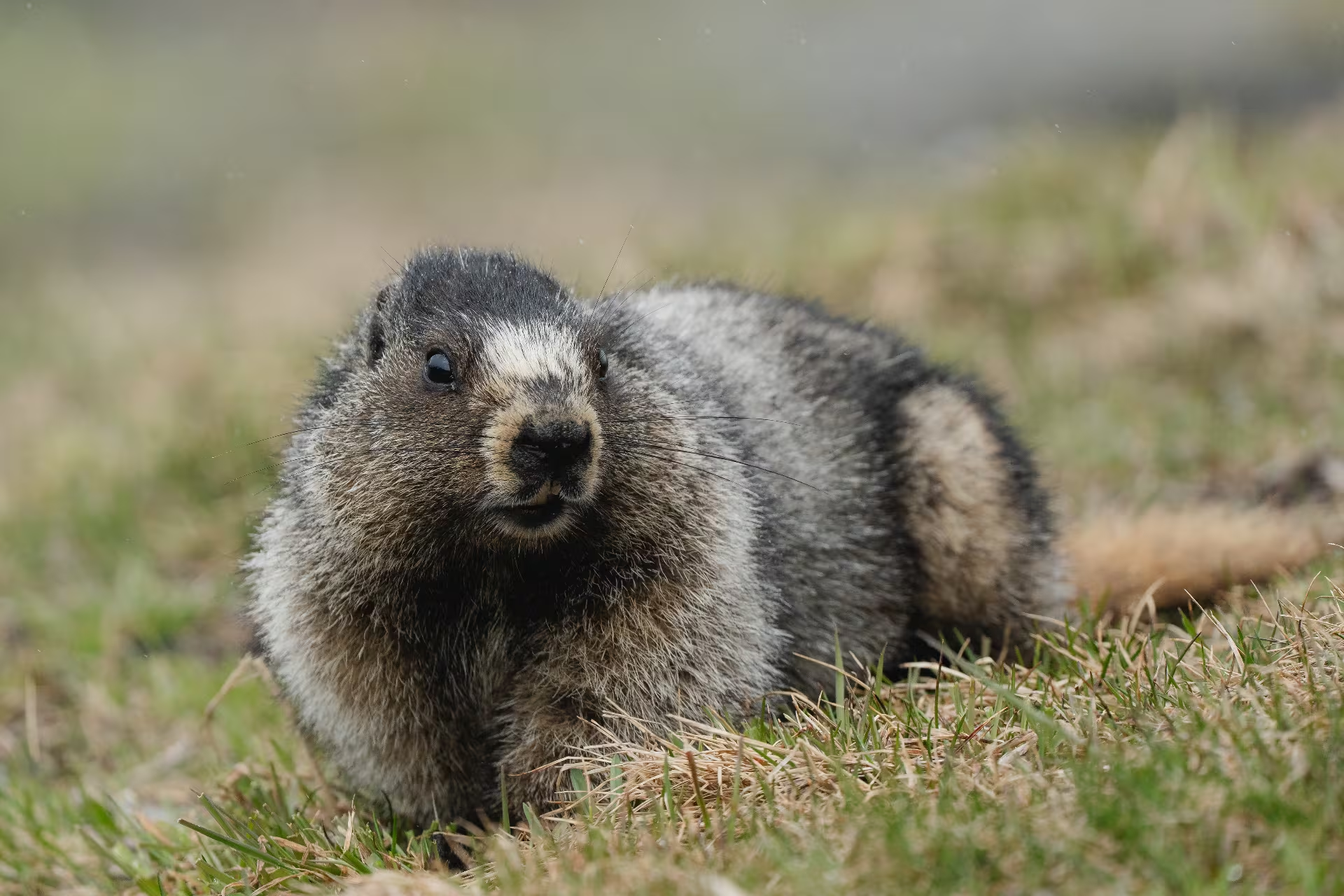
The marmots living among the rocky alpine slopes gave the area its eventual name. Their shrill, echoing whistle — a warning cry heard across the meadows — became so familiar to settlers that they simply began calling the place ‘Whistler.’
The marmots’ whistle rang across the alpine meadows long before any gondola ever climbed the mountain. In that sound, the valley already had a name.
Rainbow Lodge & the Pioneers Who Built a Community
The Philip Family Arrives (1911-1914)
In 1911, a young couple from the American East Coast — Myrtle and Alex Philip — took a steamship from Vancouver to Squamish, then spent two full days on horseback navigating the barely-trodden trail north to Alta Lake. What they found stopped them in their tracks: a glacial valley of extraordinary beauty, with turquoise lakes, towering peaks, and forests thick with possibility.
They came back with a plan. In 1913, Myrtle and Alex purchased ten acres on the shores of Alta Lake for $700. The following year — 1914 — Rainbow Lodge opened its doors as a wilderness fishing retreat.
Built by the Philips and Myrtle’s family, the original lodge had four bedrooms, a shared dining area, and a kitchen. But what it lacked in scale, it more than made up for in spirit.
From Four Bedrooms to One Hundred Guests
In the same year Rainbow Lodge opened, the Pacific Great Eastern Railway pushed through the Whistler Valley. Suddenly, the remote Alta Lake community was accessible from Vancouver in a single day. Guests arrived by train, drawn by the fishing, the alpine air, and Myrtle Philip’s legendary hospitality.
Rainbow Lodge grew to over 40 cabins, a post office, stables, tennis courts, and a general store — accommodating 100 guests at its peak. By the late 1920s, it had become the most popular resort destination west of Banff. By the late 1930s, the most beloved honeymoon spot west of the Rockies.
‘The most popular resort west of Banff.’ An honour earned not through marketing, but through Myrtle Philip’s fierce commitment to community, warmth, and the land itself.
Myrtle Philip: The Heart of Creekside
To understand Creekside is to understand Myrtle Philip.
She was more than a lodge owner — she was the first lady of the valley. A tireless community organizer, she championed the construction of Alta Lake’s first school, helped build social life in an isolated wilderness settlement, and modelled a way of living rooted in generosity, hard work, and deep love for the land.
Myrtle and Alex operated Rainbow Lodge until 1948, when they retired and sold to the Greenwood family. Myrtle lived in the valley until her death in 1986, at the age of 95. The warmth she built into this community still lives here. You feel it in Creekside’s unhurried pace, its friendly locals, its instinct to welcome rather than impress.
The Birth of Whistler Mountain
An Olympic Dream Takes Shape (1962-1965)
In the early 1960s, a group of Vancouver businessmen formed the Garibaldi Olympic Development Association (GODA) with a singular ambition: to win Canada the bid for the 1968 Winter Olympic Games. They looked northward to a mountain then known as London Mountain and saw in its vast vertical drop everything they needed.
From 1962 through 1965, Garibaldi Lifts Limited developed the south side of the mountain for skiing — the area known today as Creekside. Active mining claims on the north side meant the lifts could only be built from the south. So
Creekside became the starting point for everything. The first gondola. The first chairlift. The first ski runs. The first mountain lodge.
In 1965, the mountain was officially renamed Whistler Mountain — finally honouring the marmots that had given the valley its character for generations.
January 15, 1966: Whistler Mountain Opens
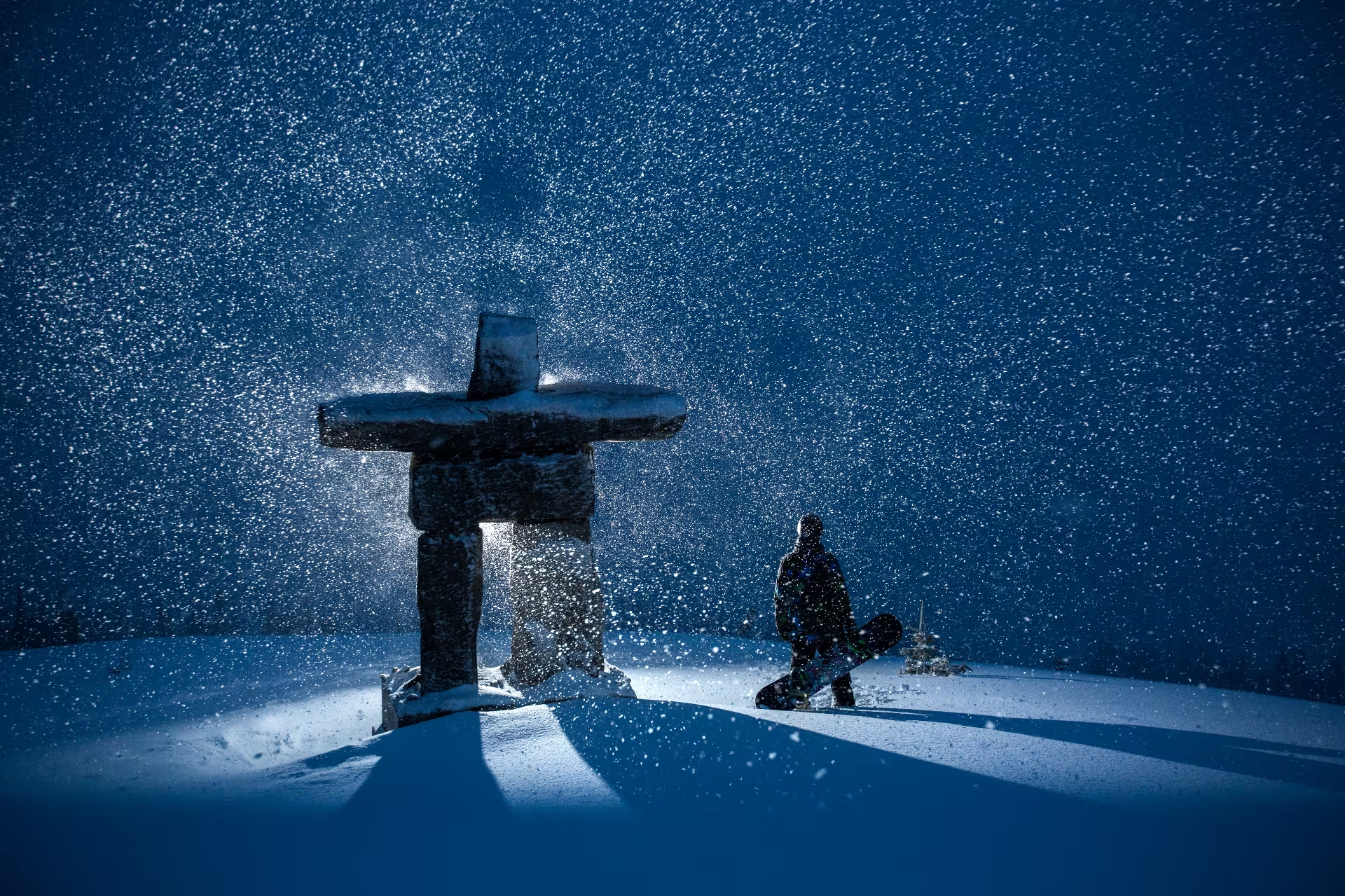
On January 15, 1966, Whistler Mountain officially opened for skiing from the Creekside base. A four-person gondola rose to the mid-station. A double chairlift climbed to the alpine treeline. Two T-bars served the upper runs. Six ski runs had been cut through the forest.
It was the beginning of something extraordinary. The terrain was remarkable, the snow conditions excellent, and the skiing world took notice. Whistler Mountain was an instant success — and though the Olympic bid ultimately failed, the mountain it had inspired would become the premier ski destination in North America on its own terms.
The first skiers rode the lift from Creekside. Every first chair, every powder day, every unforgettable run on Whistler Mountain traces its lineage back here.
Growth, Rivalry and the Rise of World-Class Whistler
Dusty's and the Skier's Culture
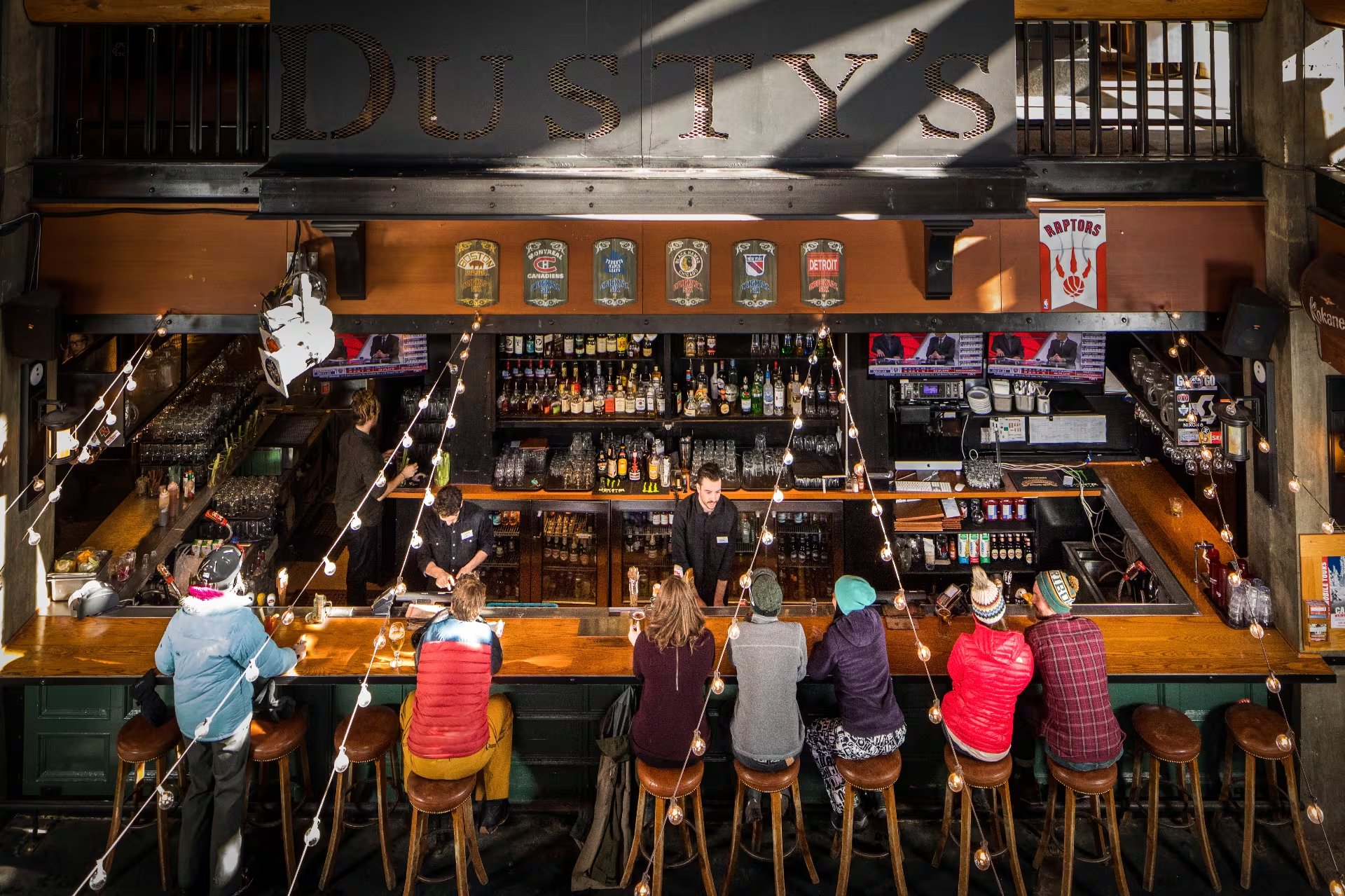
As the mountain grew, so did the community at its base. Creekside developed its own culture — practical, unpretentious, rooted in the mountain. Dusty’s Bar & BBQ became an institution: the apres-ski gathering spot where skiers ended their days with cold beer, warm food, and the easy camaraderie of people who had shared a mountain. It is still there today, a living piece of Creekside’s original spirit.
Blackcomb Opens and the Great Mountain Rivalry
In December 1980, Blackcomb Mountain opened on the adjacent ridge, launching one of the most celebrated rivalries in ski resort history. Two mountains. Two operators. A decade of fierce competition that ultimately benefited every skier who visited. Whistler Village was built the same year as the new planned resort centre — a purpose-built destination between the two mountains. Creekside, the original base, retained its quieter, more local character.
By the mid-1990s, Whistler-Blackcomb was regularly named the best ski resort in North America. In 1999, it became the first North American resort to surpass two million skier visits in a single season — validating what Myrtle Philip’s fishing guests had sensed almost a century before: there was something exceptional happening in this valley.
The first skiers rode the lift from Creekside. Every first chair, every powder day, every unforgettable run on Whistler Mountain traces its lineage back here.
Creekside's Full Circle Moment: The 2010 Olympics
Forty years after the original Olympic bid sparked Whistler Mountain’s construction, the valley finally welcomed the world. Vancouver won the right to host the 2010 Winter Olympics, and Whistler became the venue for alpine skiing and sliding sports. The timing was poetic: Creekside, where the dream had been born in 1962, was at the centre of it all.
The Creekside base area was transformed for the Games — new commercial buildings, a multi-level parkade, and upgraded facilities along Franz’s Trail. And in 2008, the Peak 2 Peak Gondola opened: the world’s longest unsupported gondola span at 3.024 km, soaring 436 metres above the valley floor. What had begun with a modest four-person gondola from Creekside in 1965 had become something almost impossible to comprehend.
The Olympic bid that built this mountain finally came home — in Creekside, where it had all started.
Creekside Today: Rooted in What Matters
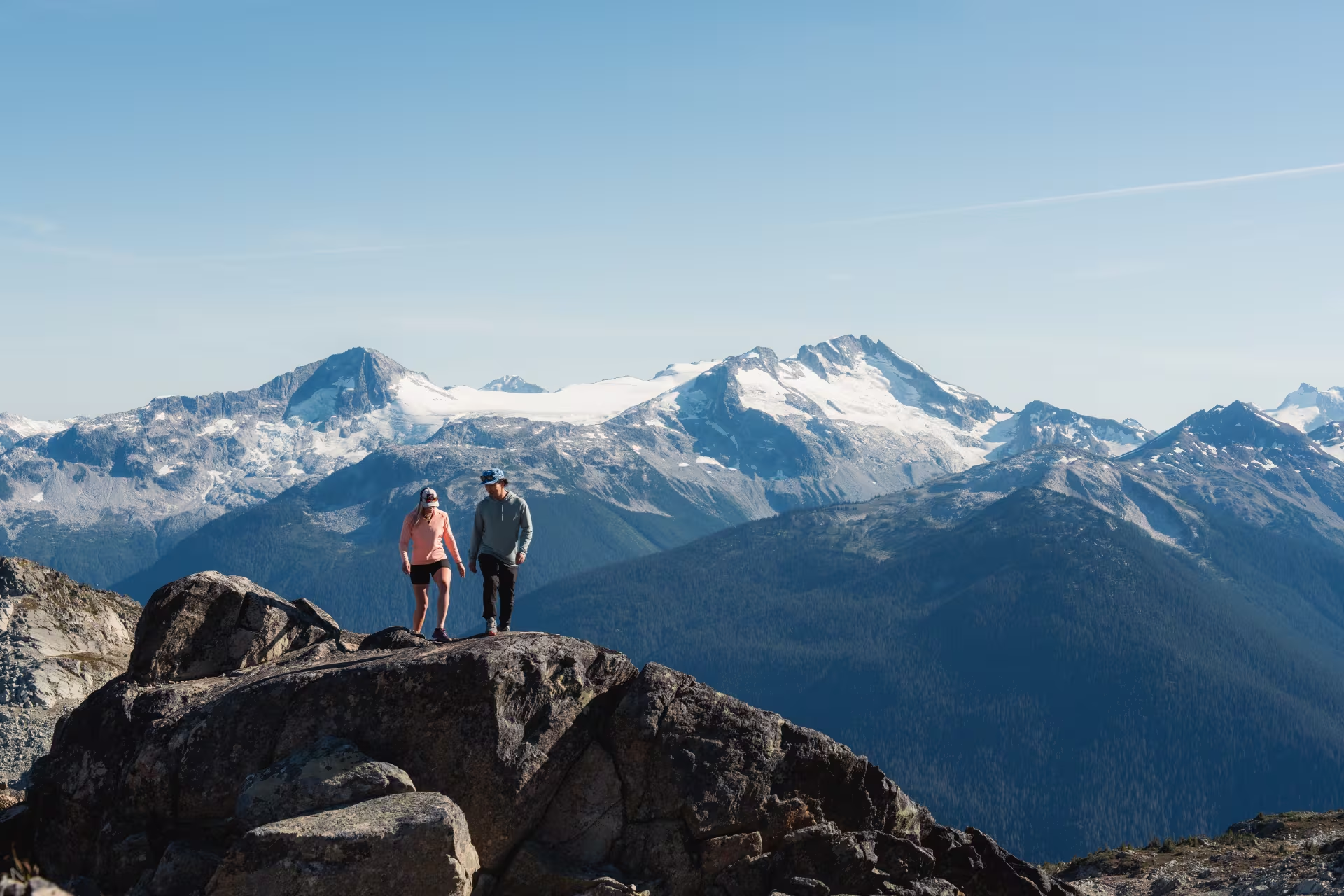
What makes Creekside remarkable isn’t that it survived the transformation of Whistler into a world-class resort. It’s that it chose not to be transformed in the same way. Quieter than the Village, more connected to the mountain and the land, Creekside held onto its original identity.
Families come because the pace is manageable. Nature lovers come because the trails and lakes feel untouched. Serious skiers come because the Creekside Gondola loads faster and the base is less crowded. And those who want an authentic Whistler experience — unhurried, grounded, real — find exactly that here.
Lodging Ovations: Honouring the Legacy
Lodging Ovations is here because Creekside is the right kind of place to build something that lasts. Like Myrtle Philip before us, we believe genuine hospitality can’t be manufactured — it has to grow from a real place, with real roots.
First Tracks Lodge puts you steps from the gondola that opened in 1966. Legends Whistler carries the warmth and family spirit that Myrtle Philip first brought to this valley over a century ago. Evolution Whistler brings the quiet, modern sensibility that today’s Creekside deserves.
When you stay with us, you’re not just visiting a resort. You’re becoming part of a place with over a hundred years of story beneath your feet.
Creekside Through the Years: A Living Timeline
1880s First Settlers Arrive
Trappers and prospectors follow the Pemberton Trail into the Alta Lake Valley. The western hoary marmots’ whistle gives the area its name.
1911 Myrtle & Alex Philip Discover Alta Lake
A young couple from the American East Coast makes the three-day journey from Vancouver and falls in love with the valley’s beauty.
1914 Rainbow Lodge Opens
The lodge opens on the shores of Alta Lake. The Pacific Great Eastern Railway arrives the same year, connecting the valley to Vancouver.
Late 1920s Most Popular Resort West of Banff
Rainbow Lodge grows to over 40 buildings and 100 guests, becoming the premier resort destination in western Canada.
1962-1965 Garibaldi Lifts Develops Creekside
The Garibaldi Olympic Development Association develops the south side of London Mountain — today’s Creekside — for skiing.
1965 London Mountain Becomes Whistler Mountain
The mountain is renamed to honour the marmots whose whistle gave the valley its identity.
January 15, 1966 Whistler Mountain Opens
The first gondola, first chairlift, and first six runs open from the Creekside base. A new era in Canadian skiing begins.
1980 Blackcomb Mountain & Whistler Village Open
A second mountain and a planned village launch the great resort rivalry and the broader Whistler destination.
1999 2 Million Skier Visits
Whistler Blackcomb becomes the first North American resort to surpass this milestone in a single season.
2008-2010 Olympic Legacy
The Peak 2 Peak Gondola opens. Creekside is transformed for the 2010 Winter Games — the Olympic dream born here in 1962 finally realized.
Today Creekside's Character Endures
Quieter, more local, and more connected to the mountain than ever. Creekside remains the original heart of Whistler — and home to Lodging Ovations.
Stay Where the Story Began
Whistler Creekside isn’t just a place to sleep before a ski day. It’s a neighbourhood with roots deeper than most people realize — built by pioneers, shaped by mountains, and kept alive by the people who chose to stay. Lodging Ovations is proud to call it home.
Why We Love Whistler Creekside
Whistler Creekside's Roots
We love Creekside for its roots.
We love that we’re the place to stay in Creekside.
The Rainbow Lodge, where it all began as a fishing retreat over 100 years ago symbolizes the spirit that still lives on in Creekside.
We love that Creekside is where the bid for the winter Olympic games began, where the iconoclastic pioneers hiked through the bush so that we could learn about this wilderness paradise.
We love Creekside for the roots it plants here — the first skiers rode the lift from Creekside, Dusty’s, the skiers’ cabins that still stand as reminders of the way it was in the beginning.
We’ve created a lot since then, but we like to think that in Creekside, we haven’t veered too far from those simple roots: Casual, laid-back spots like Dusty’s, beckoning you to spend just a little more time in nature with those you love
Creekside's Warm Attitude
We like to think we’re part of that attitude that we love so much here. That warmth and laid-back way of life that you just can’t force.
We like to hope that Creekside is warm because we are warm, because we genuinely care that you get up the lift as fast as humanely possible, that you get your dinner when you want and can eat it by the fire, outdoors by the lake, or standing around your kitchen counter.
We love the attitude in Creekside and want to spread the warmth and cheer to all our visitors.
We love you, Creekside!
Myrtle Phillips & Creekside
We love the community in Creekside, the one we try hard to help build and be a part of.
We love the people like Myrtle Phillips, strong community organizers who, through sheer strength of will and character created a community here. A place where people would come to fish and relax, but one also that people would feel at home in.
Myrtle Phillips carved out a home here and didn’t shy away from the hard work it took to do this. Her smiling face reminds us that hard work is often its own reward.
The Love for Whistler Creekside
The love locals and visitors alike feel for Whistler Creekside carries us.
Through the multi-million dollar expansion, through Olympic bids and new gondolas being built. Through Whistler Creekside restaurants that become like well-loved extended homes through the years, to the new ones that enter the fray.
Through the adventures that present themselves: building a resort from scratch in the wilderness over one hundred years ago, to embracing the new sport of downhill skiing in the 1960s, to the new adventures like mountain biking, there are so many reasons to love Creekside. Thank goodness we don’t have to choose just one.